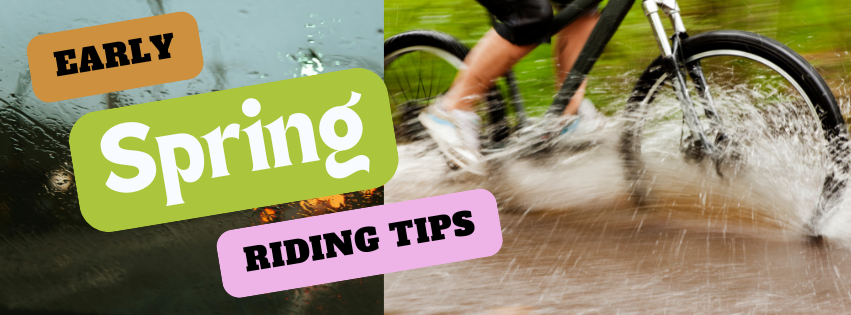
While many Winnipeggers will wait for the snow to melt and the streets to dry up, you may want to take advantage of the warmer temperatures and get your bicycling season started. Here are some tips on how to navigate the puddles, sometimes icy and often pothole-filled streets.
– Typically it is best practice to ride at least one metre away from the curb, however in spring, there can be ice or debris in the gutter. In spring you need to ride at least a metre out from the edge of the “rideable” surface and this can mean taking more space or even taking the lane.
– Don’t ride through puddles. They are not a rideable surface and can contain hidden treasures like potholes or underlying ice that you really do not want to find.
– When temperatures drop slightly below zero, those wet, mushy streets can transform into skating rinks. This is when studded tires really can make a difference. Don’t have studded tires? Maybe it’s a good time to take a day off and wait for more favourable temperatures. Still want to ride? Take it slow and stay alert.
– Multi-use paths and bike lanes can also freeze up overnight and become a hard rutted surface that can be difficult to ride on. Again, studded tires help but sometimes you may have to abandon the path or bike lane and take to the road.
– Sand helps with traction in winter but in the spring it can accumulate along the edge of roadways and especially at intersections. It can be slippery, especially when cornering.
– When the City begins its spring cleanup, be careful when riding over freshly cleaned areas. The street sweepers can leave behind a thin layer of fine particles that gets polished up into a paste and can be very slippery. It also makes a mess of your bike and, when it dries up, it creates clouds of fine dust.
– We all know about Winnipeg potholes and these can pop up at any time in the spring. Stay alert so you don’t end up being swallowed by one.
– You can’t avoid the spray from car tires, but you can prepare for it. Most of the time you will not need waterproof splash pants (not that they are a bad idea), but a jacket that at least resists water is a good idea. You might want to also consider some kind of eyewear to avoid getting this messy spray in your eyes.
Here are a couple of tips for your bike:
– Full fenders are always a good idea and in spring they will keep you cleaner and drier.
– It is impossible to keep your bike clean, but it is a good idea to at least rinse some of the grit off of it when you can. These fine particles can work their way into the moving parts of your bike and cause significant wear and expensive repairs.
– Keep your chain well lubricated. The wet conditions combined with the salt on the streets can quickly rust a chain. Pay particular attention to lubricating the bushings or pivot points of the chain so that it continues to run smoothly through the drivetrain of your bike. Use a lubricant designed for a bike, preferably a “wet” lubricant and not motor oil or WD-40.
– When spring finally arrives and the streets are cleaner, give your bike a good cleaning and consider getting it serviced.